
The untold story of Australia’s first Holden utility – Model 50-2106 (FX)
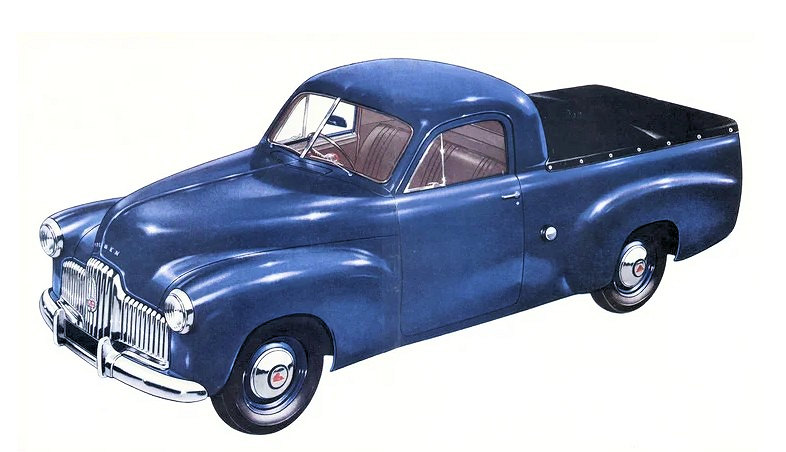
The following presentation is the work of the well-known Holden author, Don Loffer, who has conducted some amazing research into the birth of the Holden Utility, and Holden cars in general.
Don delivered this presentation to a Holden Retirees Club Lunch audience on 3 September 2026, and has kindly given the Club permission to make this transcript available to a wider audience via our website.
- Copyright © Don Loffler. All rights reserved for this article and its images.
ooo000ooo
Firstly, a little bit of a preamble to the Utility Presentation. I fell in love with the Holden when they came out in 1948 because I was a nine-year-old, car crazy, boy. Now to save you doing your arithmetic I'm 86 now and I've never lost that love of the Holden.
My research started in a most unlikely way, at a retirement village. I love talking to people in nursing homes and retirement villages because if they have been blessed with a good memory, I hear marvellous stories from them. And to set things going, I used to say, "Now, I want you to think back to a really early make of car, one that perhaps your grandparents had?" And I hear all sorts of wonderful makes: I've heard of Amilcar; I even heard of Ceirano, a luxury Italian vehicle. I did get the encyclopaedia out and see what that was.
So one woman put up a hand and said, "Opel". And I said, "Well, yes, that is a German make of car, but we didn't have any here in the olden days". “Yes, we did”!
I said, "Why do you say that?" “Our friends had one.” “Really?” “Yes.” “Do they still have her?” “No.” “Are they still living?” “He isn't, but she is. She's in hospital at the moment. She's having a knee reconstruction, but she'd love to talk to you. Give her a ring in the hospital. “
I said, "We can't ring up someone in the hospital.” What were they thinking?
"Yes, go on. She's bored, witless. She'd love to talk to you."
So I took my courage into both hands and sure enough, she was thrilled to have someone to talk to and yes, they had a 1938 Opel Tourer and no, they don't have it still, but she has lots of photos of it. And when she comes out of hospital, I'm welcome to come down to Victor Harbor, the beach resort, and see them.
So, I was able to photograph all her photos and get the story of their Opel.
And you're going to say now, "Hang on, you're talking about a Holden Ute."
Well, I'm going to have to show you how there's an Opel connection to the first Holden utility.
Now, where must I start with this? Well, if I were to tell you the progressive input I had of this, it would be a dog's breakfast. And so, I decided I will give it to you in chronological order.
Starting Point
[Click on small images to see larger images]
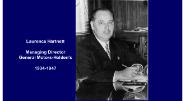
So, I start off with none other than Laurence Hartnett, the Managing Director of General Motors Holden's, 1934 to 1947. I have the highest respect for that man. He was hugely energetic, he was ambitious, he was well-informed, and he was right up with the very latest in automotive engineering. He was ahead of his time, and he was a visionary. Well, in 1934, he takes the reins; 1935, he was in action already, and what does he do?
 He buys a site of pretty awful-looking countryside at Fishermans Bend for a new factory, because the city site was completely overwhelmed and past its use-by date.
“Fishermans Bend”, can I say, how I hate "Fishermans Bend"! What a stupid, stupid move that was. Unfortunately, I've had to obey the rules and use "Fishermans Bend" in my books with gritted teeth, and in my book She's a Beauty over there, I have a little protest on the sideline saying how I object to it. Well, now I'll get off my pulpit, I've preached my sermon, and I shall advance.
But, behind the scenes….
Now, what Hartnett did there was public knowledge, of course. Now, what about behind the scenes? What was this man doing? Well, he was writing to the Prime Minister of Australia, the Right Honourable J. A. Lyons. And I wonder what he was telling my dear Prime Minister on the 18th of November, 1935?
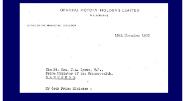
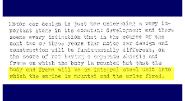
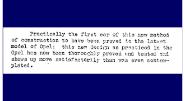 He was saying there is a new development in automotive construction, and that is that the body will be integral with the engine. In other words, the new development is monocoque chassis-less construction.
This, Prime Minister, is the way of the future.
And what is more, there's a new Opel out in 1935, which has this new construction.
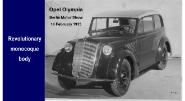
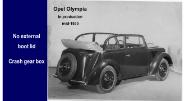
It was unveiled at the Berlin Motor Show in 1935, 14th of February, and here is an example of the little car. And this example was the Tourer, it had no external boot lid, and a crash gearbox.
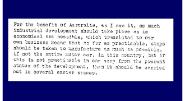
And Hartnett says, "You know, we here in Australia ought to be producing that car. And if we can't do it straight away completely, let's do it first of all the body, then the engine, so we can do this this really up-to-date car here at General Motors Holden's."
But behind the scenes..TOP SECRET!
Now, what did he do behind the scenes, though? Nobody was allowed to know.
He got his engineer, Eric Rainsford, to 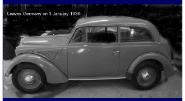 import a 1935, right hand drive, Opel Olympia! Now, I ask you, how many right-hand drive Opels would they have done by then? It was announced in February 1935, but it only went into production in mid-year, and here's Hartnett ordering a right-hand drive version.
Well, the order was accepted, and they found out that it left Germany on the 3rd of January, 1936.
Now, just think about Hartnett in 1936. Fishermans Bend is under construction. He has in fact he has just laid the foundations.
Amazingly, this car still exists!
Now, I'm going to do something I don't like doing normally; I'm going to jump right through now into the fact that this car still exists and you can see it.
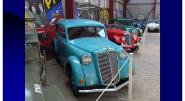
It's in a little museum in South Australia in Goolwa. It's not far from the resort of Victor Harbor. And it was a solid-roof car, a saloon,
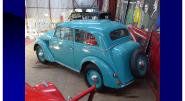
And there is the rear view. You can see there is no external boot lid,
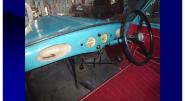
Now, far be it from me to be picky, but I really didn't think that that was the true blue. Does that look like a 1930s blue to you? Don't think so.
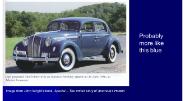
I'm going to suggest that perhaps it might have looked like this colour. That is an Admiral— an Opel Admiral presented to Adolf Hitler on his birthday in 1938. And that's out of John Wright's wonderful book called Special: The Untold Story of Australia's Holden.
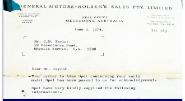 So, how do we get this information? How do we know that it left Germany at that date? Well, a man living in South Australia's industrial city of Whyalla wrote to Opel because he had that little car. And his name was Mr. Taylor, from Whyalla Norrie, and General Motors sent him this letter: "Your letter to Adam Opel concerning your early model Opel has been passed on to us for acknowledgment. Opel have very kindly supplied the following information..."

And look at that! Every detail of the car! Two door, four seats, all that. Production date: December the 5th, 1935. Shipping date: 3rd of January, 1936.
So, while Laurence Hartnett is laying the first concrete for Fishermans Bend, he is anxiously waiting for this secret car to arrive.
And there is the photograph of Mr. Hartnett commencing the building operations, January the 30th, 1936.
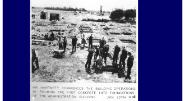
What an achievement that was! That factory was finished at the end of 1936. A marvellous achievement!
Hartnett imported at least three more Opels between 1936 and 1938.
And in my researches, I've discovered that three more Opels were imported by Hartnett between 1936 and 1938. And the lady who was in hospital, she was told that hers was one of four that were specially imported. I've not been able to find any more evidence that there were more cars, but at least we know that there were these four.
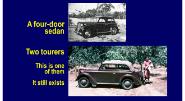
So, there was a four-door sedan, and then there is the hospital lady's Opel. Her name was Glenda Greenhough. And they kept that Opel for quite a few years. There were two tourers, so that is a photo of one of them.
And Hartnett says to himself, "Now, if we're going to build Opels here, we have to have a Coupé Utility." Well, you know, he's here in 1934 as the new director, and 1934 is the year that Ford invented the Coupé Utility. Lew Bandt of Ford invented that.
So a Coupé utility is one that looks exactly like a sedan- it has to have the payload area, the deck, integrated with the cabin.
Now, there were two Opel tourers. So the Greenhough’s got one. So, what do you think happened to the other one?
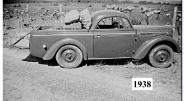
The engineers converted one of the tourers to this, the world's first chassis-less utility. What a little treasure that was - 1938.
Along comes a world crisis in 1939 – War!
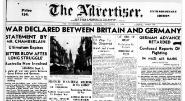
But lo and behold, what comes in 1939, war! Anything German is anathema.
So, Hartman's grand vision comes crashing now and in ruins.
Now, what's to happen for this precious little utility?
Because the engineers had so reinforced it that it was robust and would last the distance – because, you see, a traditional utility had chassis rails. It could take lots of weight. To reinforce a Monocoque body, that was quite a piece of engineering. So Hartnett insisted that this one would have to stay within the firm, and so he made sure that it was sold to one of the employees.
The other Opels were then sold to dealers, for on-sale to customers. Now, these cars weren't test cars, they were research cars and so they were brand new. So, that Maroon one you saw belonging to the Greenhough house; they bought it as a brand new Opel from Claridge Motors in Unley, South Australia.
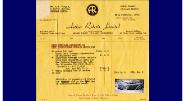
So Mr Ken Virgin from the Tool Shop took out some Hire Purchase for 100 pounds so that he could buy this Opel utility. And that was then his family's transport. And look what he did, he really used that Opel Ute, he and his mates.
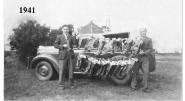
Now, Ken Virgin is on the right, he and his mate went rabbiting - they're all the hides that they've got from their expedition. This Opel utility was used a lot, deliberately, to find out how it would stand up.
So now we have to fast-forward - the war is over and in 1947, Ken Virgin gets a surprise call from General Motors Holdens. “May we borrow your utility because we are designing a Holden utility and we want to know how it was reinforced? We want to pull your little Opel completely apart and study its every detail because it has stood up so well to your use, we need to know all about its reinforcement.”
Now for Ken, that was wonderful news, because they said “Do you know what, we will in exchange lend you, a 1946 Chevrolet Woody Wagon.” Now imagine, Ken and his wife had eight children and all they had to transport them was this little Opel utility, so this was absolutely marvellous news; so they struck a deal.
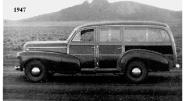
“We will let you have the Woody Wagon, provided you take it up to Outback South Australia, loaded with camping gear and accompanied by a research Chevrolet sedan” and that was fine by him. So there's the Woody Wagon that they were in .....
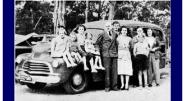
..... and there he is with the family. So this Woody Wagon was loaded up with all this camping gear and off they go to the Flinders with this research Chevrolet.
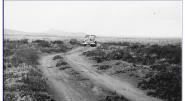
There it is, that's the research sedan and Ken then had to drive this 1946 Chevrolet on research. And why was it a research vehicle? Because it was fitted with a prototype Holden engine and drivetrain.
Now, let's just revise our facts. The Americans sent out three hand-built prototype cars, but they sent out 10 engines and drivetrains. So Holden's had spare engines. Now, imagine a Holden, weighing one ton, the Chevrolet weighed one and a half tons. Imagine a Holden engine and drivetrain being installed in a body far too big for it, but Ken had to drive this car until it couldn't function anymore. Now, I got all these photos from his son Glenn, and Glenn just wished he'd asked his father what happened in the end. So that's something we don't know.
So, soon, at GMH Fishermans Bend ….
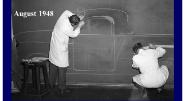
Well, at Fishermans Bend, they started with the drawing of the utility. That's August 1948, so the sedan is not out yet
- and then we have this picture:
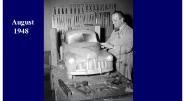
Now I could never understand that photo. Why? Why is an Australian bothering to make a clay model of a Holden? They have done that in America. And that remained the mystery and it fooled all of us Holden authors. The whole lot of us. We all said that that is a clay model of the Sedan. Wrong! What was the next photo in the archives?
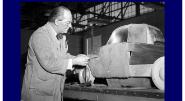
That! And I don't know why other authors, apart from me, didn't they find the next negative? I don't know. Anyway, I got completely fooled by it, and there was the answer; he's doing the clay model of the utility!
And now we fast forward to December 1948, where we can see the clay model. Now This is an interesting photo.
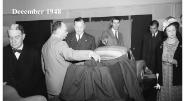 On the 29th of November, Prime Minister Chifley unveiled the Holden. Late that afternoon, the Governor General of New Zealand and his wife, Sir Bernard Fryberg and Lady Fryberg arrived, late in the afternoon and missed the grand announcement of the Holden But, Managing Director Bettle, with his back to us, gave them a private tour of the factory afterwards. And as part of the tour, he unveiled this clay model. And you can see Bettle taking the wrap off it; there is Fryberg, next to him and then there’s Lady Fryberg on the right. And first of all, I thought, "Oh, the poor lady, she's bored out of her brain". But can you see there's just the nose of a man there? She's listening to what this man is saying. So, that's a very interesting photo altogether.
Then they managed, of course, to build the prototype utility, which they completed in October 1949 - and there it is, 10 in the windscreen shows it is October, and we know the year is 1949.
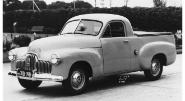
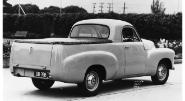
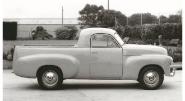
That's a copy photo, but you know, that Holden utility, from whatever angle you looked at it, it was beautiful!
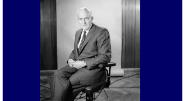
Now, I know I've got stars in my eyes, but really that is a most pleasing shape, no matter which angle you look at it from, it looks good and so in sympathy with the sedan and it was the work of Gil Mathwin. Now see, Coupe utilities were unknown in the United States. Their utilities were these big truck type utilities, so the Australians had to design the utility and Gil Mathwin did it. I think he did a beautiful job of that utility.
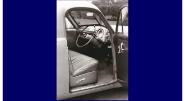 Now, there's the interior view - I showed my son Michael these photographs, and I said to him, "Now Michael, that is the brand new utility. Isn't that a wonderful picture of the interior?" and he said, "That's not new!" I said, "Yes, it is, they've just finished it." He said, "Haven't you looked at that photo, Dad? The carpet is dirty, the driver's seat has got a sag in it". He said, "They've made that out of a used sedan!”
Oh, oh, oh, yes! So I had to look at this photo with new eyes. And you know, I had the privilege of speaking to Bill Scott. Now Bill Scott was the man who led the team creating that prototype.
And Bill said to me that he'll never forget the day that his boss came along and said, 'Good job you did with that Utility, Scott'. And he was so shocked to be complimented he said, "I beg your pardon, sir?"
“Good job you did with that utility, Scott”. And Bill told me “I never forgot that. From there on, I praised anyone who did a good job, right down to the man who swept the floors. I always remember to compliment someone who's done a good job.”
So then, I looked at this photo with new eyes and I said, "Oh no, that's got a two-tone dashboard. No production 1948 Holden ever had a two-tone dashboard.” So which vehicles did? OH! Let's look up the specs for American prototypes 1, 2, 3 and Australian built prototype 4. We know what happened to prototype 1, we know what happened to prototype 2, we know what happened to prototype 4. This must be prototype 3! And I thought, “Why didn’t Bill Scott tell me that they used a prototype?” I said that to my son Michael and he said “Well to them, it was a worn out old test vehicle, not worth much.” The fact that it was an American prototype really didn't mean anything to them at all.
Now, up to this time, there had been no photograph in anybody's book, of prototype 3. And I've gone through the Holden archives, negatives, right through - there was no photograph anywhere of prototype 3. It was a dark horse.
Now I'll tell you how I came to get a photograph of that vehicle. A man visited the National Museum of Australian in Canberra and happened to buy my book “Still Holden Together”, and in it I said there is no photograph ever of prototype 3. Well, on the 8th of February 2002, a letter arrived for me from a man called John Rae, whom I had not ever heard of. I opened it up and out fell a photograph of Prototype 3 and I went so crazy, my wife thought she’d have to call the ambulance. I couldn't believe it - it was totally out of the blue. And this is what John wrote “Is this what you're looking for?”
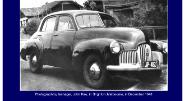
My eyes nearly popped out of my head as, when a teenager, riding his bike along Dendy Street Brighton, there was what I knew to be a prototype. The red show label called it a "Chev" and that's how the Prototype cars were registered. It was 1946 Chevrolet's engine, number eight and with his Brownie Box camera, he took that photo. And so I had the privilege of republishing “Still Holden Together” in 2010 and I was able to include John Rae’s photograph of the unseen prototype. And there's John Rae's photo. Straight away, of course you recognize, prototype 1 is JP48O, prototype 2 is JP481 and 3 was JP482.
So you can see just see the top of the registration sticker that he read, which proved, of course, it was a prototype. Now, you can see that there's no name Holden on the bonnet. The Americans had put GMH letters on it, but they were taken off. And the emblem, the grill badge, doesn't say the word "Holden". The car has got its original American bumper bars which were thinner than the production car and the other little changes they made as well.
Prototype testing
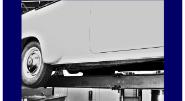 There's only one photograph of that prototype ever being tested and there you can see that the stones got whipped up onto the rear quarter panel and caused damage. Well, it was too late to do anything about it for the production of the earliest utilities, so they had no stone guard, but the later ones were fitted then with a rubber stone guard just like the sedan, but they were very big stone guards
Pre-release photography
Of course, Holden's had to have the photography ready for the announcement, and so they had to do pre-release photography. They chose a farmer and his son out near Leongatha. And the farmer was called Vic Harley and his son Tom. Now, why would Holden's be able to go there? Well, that would have been organised by Alan Perry, the dealer in Leongatha. I've never been able to find out why there was such a special relationship between Perry and General Motors Holden’s. There must have been some really good connection because I've got other examples where Perry got favourable treatment from Holden's.
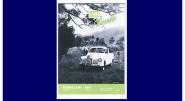 Anyway, it was a little place called South Kardella near Leongatha and they took an early production utility there- remember, the Holden utility was formally announced at the end of January 1951. This is November 1950, where they've got the first production utility. So, that's not the prototype, that's an early production vehicle. By November they had 84 utilities produced.
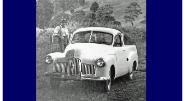
So there's Vic Harley and his son Tom at the wheel. It would have been a big deal for Tom driving a secret utility.
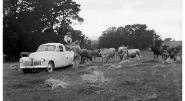
And they photographed the utility being used in all sorts of farm work.
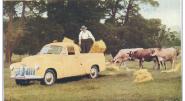
In Pointers magazine, they coloured up a photo. You can see, can't you? It's not a real colour photo originally, but it was then Nankeen Cream, the colour of the first of these utilities.
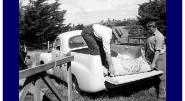
And there's Tom helping Dad with a bag of Super, and there are many other photos as well.
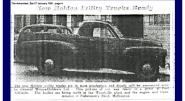
There was only one sneak photo of the Utility and this absolutely awful photo. It was published in The Advertiser in Adelaide on the 27th of January. So it's just a few days before the utility came out. It was photographed there at Woodville.
First sale!
Now, who would get the first retail sale of utility? None other, of course, than the man who got the first sedan. Who was that? Who was the Managing Director of BHP? Yes, Essington Lewis.
Lewis was very instrumental in supplying Holden with steel, coal and coke. If he hadn't done that, the Holden would never have been released in November 48 and would be well into 49 but Lewis made sure that BHP gave Holden's priority delivery.
Now he also wrote to Harold Bettle and said “I would like to purchase the first car off the line”.
Now, that was not possible, of course, because Holden's kept the first ten cars off the line as company cars for quick testing. So the company said, "Well, we'll give you one of the later productions then". "No," he said, "You won't give it to me, I will buy it" They said, "Well, if that's the case, you'll have to wait until the Holden goes on sale to the public."
Now think of this; by the end of 1948, we have 500 dealers around Australia, absolutely dying to get a Holden. And how many had they produced - 163? But how many did they let out of the factory? 112. So not every dealer has got a Holden by any manner of means and it took them until February 49 to get one Holden to every dealer around Australia. In the newspapers, there was an announcement then for each, Eastern Australia, Central Australia and Western as to when the Holden was allowed to be sold at retail.
Here in Victoria, Eastern Australia, the 23rd of February; in my state, South Australia, the 25th and in Western Australia, the 28th February, so three different first days of sale.
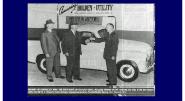
Now, to make sure that Lewis got the first Holden car literally bought at retail, they delivered his car to Preston Motors on the 24th of February. So he got it one day earlier and he paid full price for it. And there's the photo, Lewis with Preston Motors handing over the car. So Holden then wanted to make sure that he got the first utility, which he did, which is there.
And you know, that the search is going on for survival Utes. There are people desperate to find this utility. Now unfortunately, we can't see the number plate on there and we've got no photo of his utility with a number plate. Well, I mean, that's a pretty large obstacle for a researcher to know. And we've got no details of its body identification. We don't know what body number it was.
So I said to someone organising the search, I think you're on a dead cause. How would you even know, if you find a wreck, how will you know it was Lewis’s?
But good on them, keep trying, and you never know what will happen.
So there we end our story.
From Teacher to Writer – A Dream Sea Change
Born in Kapunda, South Australia, Don gained an Arts degree and two Education diplomas from the University of Adelaide. His late wife,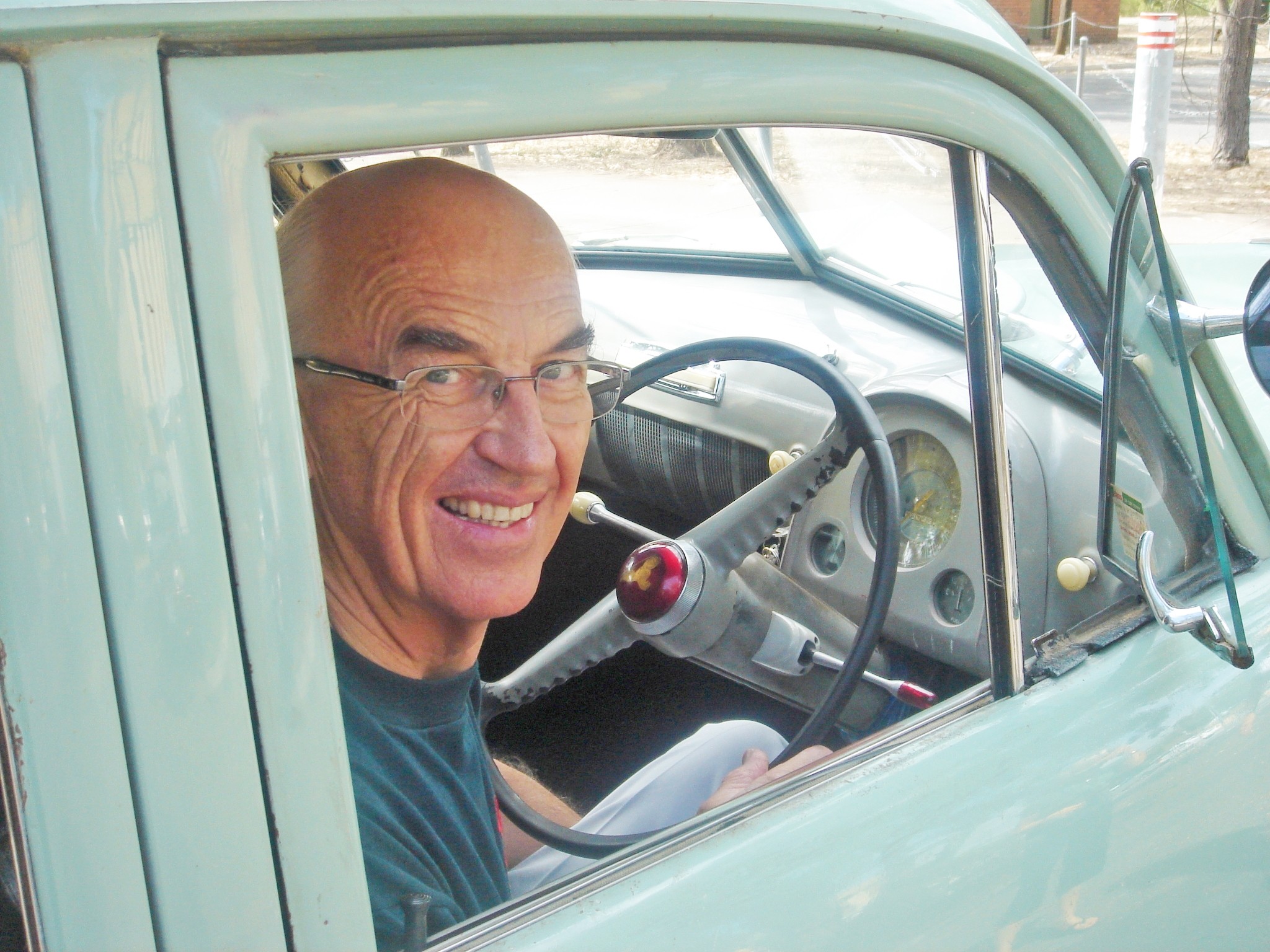 Lois, was also a graduate with similar degrees from the same university.
Some people guess that Don is the son or relative of a Holden dealer, or a former Holden factory employee, or someone closely connected with the motor trade. He is none of these, but a retired German, Latin and Chemistry teacher.
He taught Latin and Chemistry for five years at Adelaide suburban Unley High School before transferring to Adelaide’s St Peter’s College, where he taught Latin and German for twenty- nine years.
In his retirement, Don has been enjoying the process of writing books on his passion – the early Holden models from the original 1948 48-215 ‘FX’ to the 1977 HZ, as well as the many makes of car on the market during the same era.
Of the eleven books he has written so far, five are histories of the 48 and FJ Series Holdens; four are coffee-table-style photo books featuring families’ old black-and-white photographs and colour slides of the Holdens they owned between 1949 and 1977; the tenth book is an identification handbook of the 48 and FJ Series Holdens; and finally, the eleventh is a multi-make book, featuring old black-and-white photos and colour slides of all makes of car on the road in the 1940, 50s and 60s.
Don hopes that his second multi-make photo book will appear early next year, and he is now working on a third multi-make photo book, but before that one is published, he hopes that Volume Two of his first book will appear.
“If that’s retirement,” he says, “I can’t get enough of it!”
Don Loffler
Early Model Holden Historian and Author
3 O’Neil Lane, St Clair, 5011 0408 612 738 Email:
Author of Wakefield Press books:
She's a Beauty! - The story of the first Holdens (1998, reprinted 1998) out of print
She’s a Beauty! - New enlarged edition (2006; reprinted, 2009) out of print
Still Holden together - Stories of the first Holden model (2000, revised edition 2009) out of print
The FJ Holden - A favourite Australian car (2002, revised edition 2010) out of print
Me and My Holden - A nostalgia trip with the early Holdens (2008) out of print
Holden Days - From the original 48-215 ‘FX’ to the 1966 HR (2012, reprinted 2013) out of print
Holden Snapshots - Images from the golden years (2015) out of print
Holden Treasures - From the 1946 prototypes to the 1966 HR (2018) out of print
Cars We Used to Drive - Australians on the Move, 1940s to 1960s (2021)
She’s a Beauty! - The story of the first Holdens Volume 1 (2023)
Holden FX and FJ Handbook - Information for the enthusiast (2025)